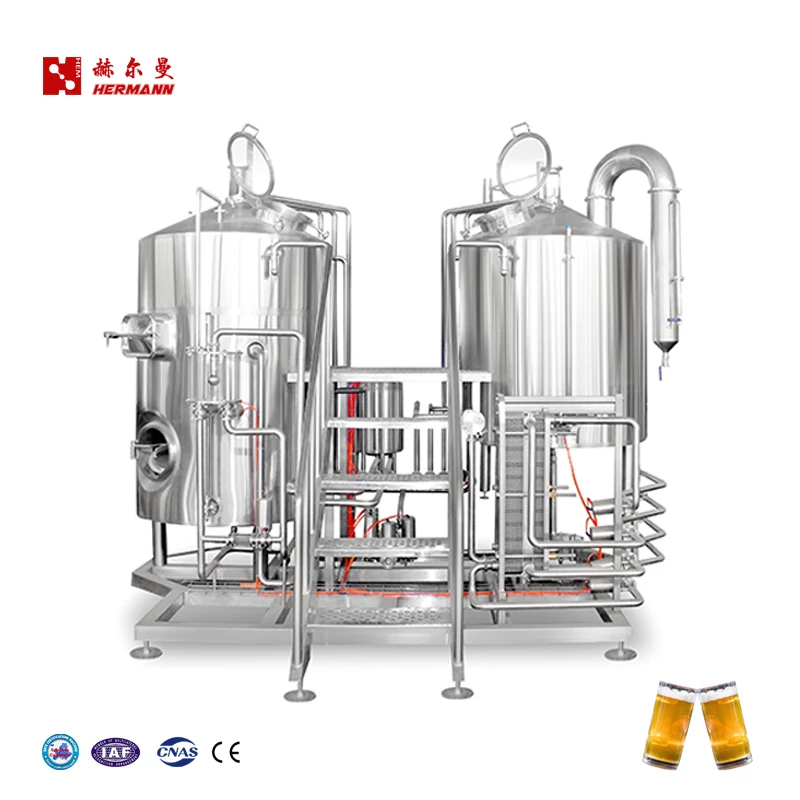
A brewhouse increases production capacity by raising the amount of saleable beer produced per operating hour, not simply by installing larger vessels. A 20 hL system running two turns produces 40 hL of wort per day; moving to three turns raises hot-side output by 50% without changing vessel size. The gain only reaches packaged beer when fermenters, cooling, utilities, labor, and packaging can handle the extra volume. Breweries should measure cycle time, brewhouse yield, tank occupancy, transfer losses, packaging rate, water use, and downtime before spending on expansion. A 10% reduction in cycle time can sometimes provide more usable capacity than a larger kettle.
Capacity planning starts with actual production records. A 30 hL brewhouse running four turns can send 120 hL of wort to the cellar in one brewing day, but the number is useful only when there is enough free fermentation volume. If eight 60 hL fermenters average 14 days of occupancy, their theoretical working volume is 480 hL per cycle before headspace, yeast, trub, dry-hop material, and transfer losses are considered. Increasing brew frequency without adding cellar availability can leave wort production waiting for empty tanks.
That relationship makes brewhouse cycle time the next measurement. Record mash-in, conversion, lautering, kettle fill, boil, whirlpool rest, knockout, and cleaning separately for at least 20–30 batches. A brewery averaging 7.5 hours for two turns should not assume every stage deserves equal attention. If lautering varies from 70 to 110 minutes while boiling stays close to 60 minutes, lautering has more room for improvement. Cutting a 100-minute stage by 15% saves 15 minutes every turn and can recover more than an hour across four daily brews.
Increasing vessel volume helps only when the rest of the plant can accept the added wort. Increasing turns per day uses the installed brewhouse more hours before more floor space and stainless steel are purchased.
Multi-vessel layouts provide more scheduling options because mash separation, boiling, and whirlpool work do not have to occupy the same vessel. A two-vessel arrangement may require one batch to leave a shared kettle/whirlpool before the following wort can enter. Adding a separate whirlpool lets the kettle start the next operation earlier. On a plant running four brews per day, recovering 30 minutes per turn can release about 2 operating hours. Over 250 brewing days, that represents roughly 500 hours of annual equipment availability.
Heating capacity has to keep pace with faster scheduling. Raising 30 hL of wort from roughly 76°C after lautering to boiling requires substantial thermal input, and slow heat-up stretches every batch. Steam-jacket area, boiler output, condensate return, burner rating, vessel pressure limits, and heat-transfer surface condition should be checked against the intended number of daily turns. A system that adds 20 minutes to every heat-up stage loses 80 minutes during four turns, even when every other operation performs on schedule.
Lauter performance deserves equal attention because capacity gained through rushed runoff can be lost through poor extract recovery. Mill gap, grist condition, mash viscosity, bed depth, rake settings, sparge distribution, differential pressure, and wort flow all affect runoff. A brewery moving from 80% to 84% brewhouse efficiency gains 5% more extract from the same malt input relative to the original yield. Production staff should therefore compare time and extract together rather than shortening lautering until gravity recovery begins to fall.
| Area measured | Useful operating figure | Capacity question |
|---|---|---|
| Brewhouse | hL per turn and turns/day | Can another batch fit inside staffed hours? |
| Lauter | minutes and extract efficiency | Is faster runoff reducing recovery? |
| Heat exchanger | hL/hour | Can wort reach pitching temperature fast enough? |
| Fermentation | hL × average occupancy days | Will an empty tank be available for each brew? |
| Packaging | saleable cans, bottles, or kegs/hour | Can finished beer leave the cellar on schedule? |
| Utilities | peak steam, glycol, water, air demand | Can simultaneous processes run at design rate? |
After hot-side timing improves, cold-side space often becomes the limiting resource. A 40 hL fermenter occupied for 18 days provides fewer annual fills than the same tank occupied for 14 days. The comparison is about 20 theoretical cycles versus 26 cycles per year before maintenance and scheduling allowances, around a 30% difference. Fermentation biology should not be shortened to force throughput; time spent waiting for packaging, transfers, laboratory release, or cleaning can be examined without changing the beer's required fermentation and conditioning period.
Tank configuration also changes how efficiently brewhouse output fits the cellar. A 20 hL brewhouse filling a 60 hL fermenter over three brews may suit a high-volume flagship beer, while 20 hL tanks provide greater flexibility for smaller releases. The tradeoff is scheduling. If the first 20 hL portion waits several hours for the third fill, the brewery needs procedures covering temperature control, yeast timing, aeration, and wort collection. Equipment selection should match the batch plan rather than applying one tank size to every beer.
A plate heat exchanger can become the next limit after adding brews. Compare knockout flow at the actual summer cooling-water temperature, not only under favorable winter conditions. If 30 hL takes 60 minutes to cool and transfer, the real flow is 30 hL/hour. Raising it to 40 hL/hour cuts the transfer to 45 minutes, saving 25% of knockout time. Plate area, water flow, glycol availability, fouling, approach temperature, and pump capacity all affect whether that improvement is practical.
Utility sizing needs the same peak-load approach. The Brewers Association has reported that breweries without an effective water-conservation program can use more than 10 gallons of water for each gallon of beer produced. A brewery planning 20% more beer therefore should not assume water, wastewater, hot-water storage, steam, compressed air, and refrigeration will rise smoothly by exactly 20%. Several users may call for the same utility at once when brew frequency increases.
Cold capacity deserves separate calculations because fermentation, crash cooling, cold storage, and packaging can overlap. Adding six fermenters increases tank volume immediately, but an existing glycol chiller may already be close to its peak rating on warm production days. Record supply and return temperatures, compressor operating hours, glycol flow, and the number of vessels cooling at the same time. A tank that takes 18 hours instead of a planned 12 hours to crash cool occupies production space 50% longer during that operation.
Cleaning time should then be treated as scheduled production time rather than a gap between batches. CIP records can show how long pre-rinse, caustic circulation, intermediate rinse, acid treatment where required, sanitation, draining, and setup actually take. The Brewers Association has specifically addressed CIP optimization because cleaning and sanitation consume substantial brewery water. If a validated 90-minute vessel turnaround contains 20 minutes of waiting for hot water or chemical preparation, removing the wait raises equipment availability without reducing the cleaning contact time.
Automation is most useful where repeated manual steps hold up vessel movement. Flowmeters can stop water additions at a recipe setpoint; automated valves can route wort without repeated hose changes; level instruments can reduce transfer monitoring; recipe control can standardize temperature rests; and automated CIP can repeat validated sequences. A brewery with four daily turns that removes 10 minutes of manual waiting from each turn recovers 40 minutes per day. Across 250 production days, the annual difference is about 167 hours.
When equipment expansion is required, craft beer equipment should be selected around the required hourly process rate rather than nominal tank capacity alone. A larger mash tun has limited use if the lauter vessel, steam supply, heat exchanger, pumps, or cellar cannot process the same increase. For a planned 25% production increase, specifications should state target hL per hour, maximum daily turns, knockout time, CIP duration, available utility pressure, pipe size, and future tank connections before fabrication.
Packaging has to be included before more cellar volume is ordered. A line advertised at 4,000 cans per hour does not package 32,000 saleable cans during every eight-hour shift. Start-up checks, seam inspection, foam adjustment, label changes, product changeovers, cleaning, stops, and rejected packages reduce effective output. A line averaging 75% of nominal speed produces about 3,000 cans per operating hour. If fermentation releases beer faster than packaging removes it, finished beer occupies tanks that could otherwise receive new wort.
Quality measurements also prevent higher throughput from producing more unsaleable beer. Brewers Association guidance for mobile canning recommends package dissolved oxygen below 50 ppb as a quality target and advises testing total package oxygen at the start of every run. Higher line speed therefore has to be checked against dissolved oxygen, fill volume, carbonation, seam measurements, rejects, and beer loss. A 15% speed increase provides little usable capacity if product loss rises from 2% to 7%.
Yield provides another source of capacity that does not require another brew. Follow volume from kettle-full wort through fermenter, bright tank, and packaged product. If 100 hL entering fermentation becomes 88 hL of packaged beer, overall volume yield is 88%. Raising packaged recovery to 91% produces 3 additional hL for every 100 hL entering the cellar. At 10,000 hL of annual cellar input, the same 3-percentage-point improvement represents about 300 hL of additional packaged beer.
Labor schedules need to match the extra equipment hours as well. Extending a brewhouse from two to three turns may increase nominal daily wort production by 50%, but one brewer cannot simultaneously supervise lautering, transfer, yeast handling, CIP, raw-material preparation, and packaging indefinitely. Time studies over 20 or more normal production days can show where operators wait for equipment and where equipment waits for operators. Staffing changes are easier to assess when labor minutes are assigned to each batch and packaging run.
Material handling becomes more noticeable at the same scale. Brewing four 30 hL batches may require several tonnes of malt depending on recipe gravity, so milling, bag handling, bulk storage, spent-grain removal, hop additions, and waste movement need enough capacity for the brew schedule. If milling and grist transfer require 45 minutes per batch, four brews consume 3 hours of mill availability. A larger mill or prepared grist case can change the schedule without modifying the brewhouse vessels.
Before ordering expansion equipment, model one normal production week hour by hour. Include each brew, fermenter fill, tank release, CIP cycle, crash cooling period, transfer, packaging run, maintenance window, and major utility user. Run the same model at the proposed volume plus 10% headroom. If the schedule requires 140 hL of free fermentation space on Tuesday but only 100 hL exists, the mismatch is visible before installation rather than after the brewhouse starts producing more wort.